
Dutch Side or French Side? Where to Buy Property in Sint Maarten / Saint-Martin
Updated: 4 days ago
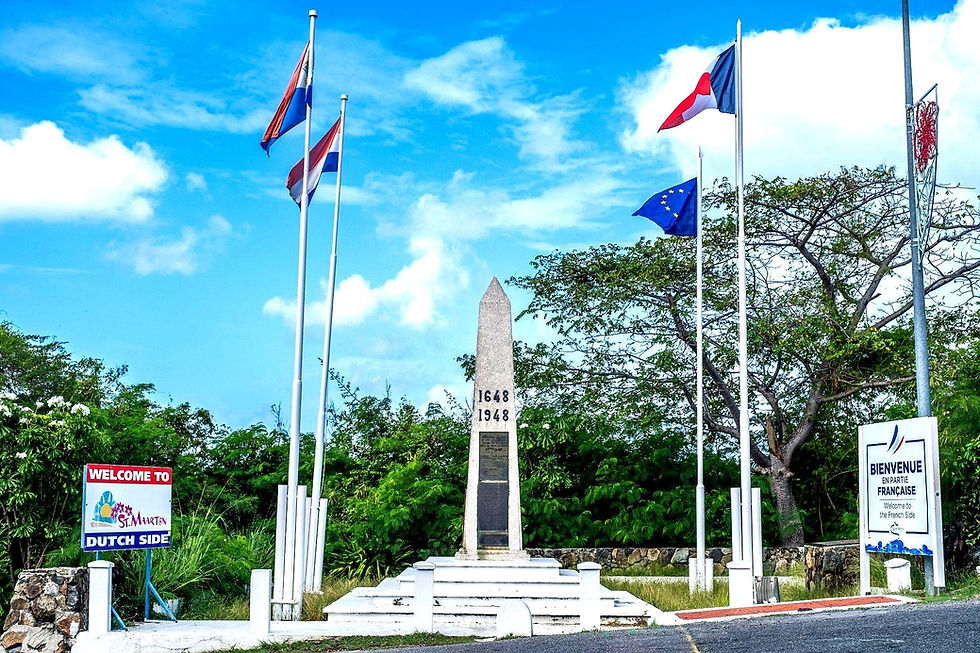
The island is one piece of land and two countries. Sint Maarten, the Dutch side, is a country within the Kingdom of the Netherlands. Saint-Martin, the French side, is a French overseas collectivity. The border is a road sign and there is no control when you cross it, but the purchase process, the costs and the taxes are different on each side. Andreu Realty is licensed on both, so this is the comparison we make for clients every week.
The short version
Currency. Dutch-side property is priced and paid in US dollars. French-side property is priced in euros.
Who runs the sale. A civil-law notary on the Dutch side; a French notaire on the French side. Both are neutral: they act for the transaction, not for the buyer or the seller.
Deposit. Usually 10% on the Dutch side, held in the notary's escrow account. Commonly 5% to 10% on the French side, paid when you sign the preliminary contract (compromis de vente) and held by the notaire.
Closing costs for the buyer. On the Dutch side, a 4% transfer tax plus notary and registration fees, usually about 5.5% in total. On the French side, the Collectivité's tax office lists a registration duty of 8% on property sales, and the notaire's fees come on top.
Who can buy. Foreigners can buy on both sides, in their own name or through a company.
What you find on each side
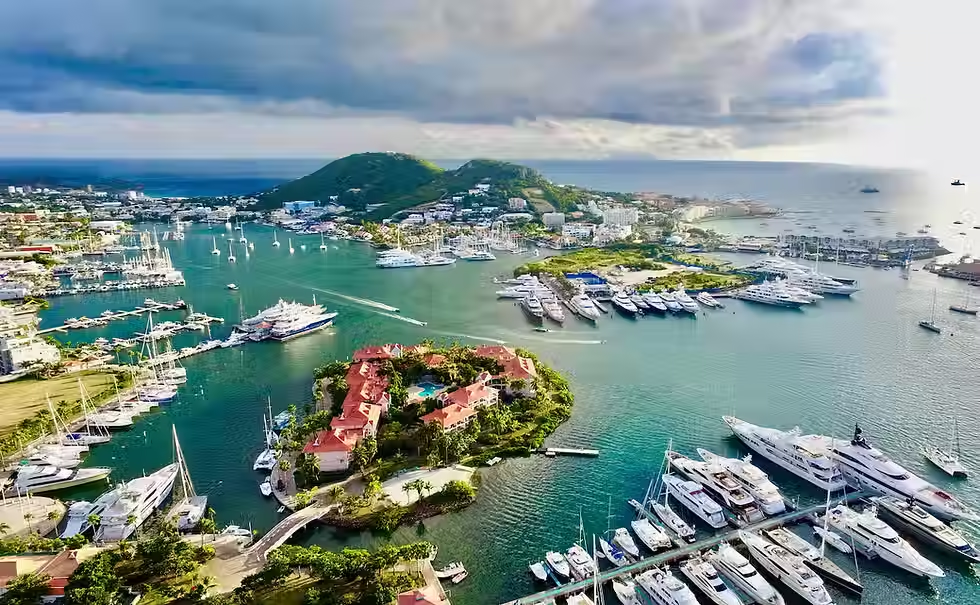
The Dutch side holds most of the island's condo inventory and its short-term rental market: Simpson Bay, Maho, Cupecoy, Pelican Key, Indigo Bay and Dawn Beach. The French side is known for the private estates of Terres Basses, the beach at Orient Bay, the restaurant village of Grand Case, Anse Marcel and Baie Nettlé. Oyster Pond straddles both.
Our own listings reflect that. Of the 65 properties Andreu Realty lists as of 30 September 2026, 63 are on the Dutch side and two are on the French side: a new villa in Grand Case at $920,000 and an estate in Terres Basses at $7,150,000.
Taxes while you own and when you sell
Neither side is tax-free. On the Dutch side, rental income is taxable, annual land tax and succession rules exist, and private individuals pay no capital gains tax. On the French side, owners pay an annual property tax (taxe foncière), the Collectivité lists a 3% duty on rental income from long-term leases, capital gains on resale can be taxed with allowances that grow with the holding period, and inheritance and gift duties apply. Your home country may tax you too. The details are in property taxes in Sint Maarten and Saint-Martin; confirm your own position with the notary and a tax adviser before you buy.
Financing
Most international buyers pay cash, and many who borrow do it at home against an asset they already own. If you want a local loan, several Dutch-side banks say they lend to non-residents, and loans there are commonly available in dollars. French banks lend on the French side, in euros, and the financing condition is written into the compromis, which protects your deposit if the loan is refused within its terms. Plan for a larger down payment than at home. See financing property in Sint Maarten as a non-resident.
Living there is a separate question
The two countries have separate immigration systems. A residence permit on one side is not a permit on the other, and buying a home does not give you residence on either. If you plan to live on the island, read moving to Sint Maarten from the US or Canada and confirm your route with the authorities on the side you choose.
How we would choose
You want a condo that rents short term, with income and costs in dollars: the Dutch side.
You want a large private estate and plan to hold it for a long time: Terres Basses, on the French side.
You earn or hold euros, or already bank in France: the French side is simpler to finance.
You want the lower closing costs: the Dutch side.
You want to walk to dinner in a village: Grand Case. You want a long beach with beach clubs: Orient Bay.
Whichever side you choose, the building or the plot matters more than the flag. For the steps on each side, read how to buy property in Sint Maarten and buying property on the French side of Saint-Martin. For the areas, see the best neighborhoods in Sint Maarten and Saint-Martin, or contact Andreu Realty and tell us how you plan to use the property.
Ready to look at what is on the market? Browse our condos for sale in Sint Maarten and villas for sale in Sint Maarten, or see every property for sale.
More questions? Our Sint Maarten real estate FAQ answers the ones buyers and sellers ask most.

Comments